EF-140 is a highly fibrillated synthetic polyethylene pulp. It is recommended for use as a thickener in coatings to improve the dimensional stability, strength, and overall crack resistance.
Ef-191 is a 100% solids, two component epoxy countertop coating system. It has a low mixed viscosity that helps avoid excess air entrapment. When mixed/cured properly, it meets the requirements for direct food contact by the Canadian Food Inspection Agency. It is offered as a 2-gallon kit.
EF-195 is a 100% solids, low exotherm two component epoxy casting system. This product is made specifically for deep pour (up to 3 inch) casting for river tables, jewelry and embedding applications. This product is designed to avoid excess air entrapment and to flow into tight crevices or around complex shapes. It is offered as a 3-gallon kit.
EF-COVE is a three component, 100% solids, epoxy mortar kit, designed for cove bases and vertical applications. This kit contains an epoxy resin, a hardener and a natural sand aggregate to help grip on vertical surfaces.
EF-MEM 100 is a 2-component, 100% solids, self-leveling and high-build flexible epoxy urethane membrane coating. It is designed to be used as a seamless flexible floor coating to protect substrates against water infiltration.
EF-MEM 300 is a 2-component, 100% solids, self-leveling and high-build flexible epoxy urethane membrane coating. It is designed to be used as a seamless flexible floor coating to protect substrates against water infiltration.
EVERCLEAN is a specially formulated microbial cleaner and degreaser ideal for removing and remediating fats, oils, grease, proteins, cellulose, starch on concrete surfaces or epoxy/urethane coated surfaces.
EF-CEMENTITIOUS PU is a three-component, high-performance water-dispersed polyurethane / cement and aggregate screed that can be applied at thicknesses ranging from 4.5mm to 6mm (3/16 in – 1/4 in).
A two-component, aliphatic, odorless, 100% solids polyurethane designed to be used as a binder for stone encapsulation in walkable and traffic areas exposed to UV rays.
AQUASEAL is a waterborne, self-crosslinking nano-sized acrylic sealer engineered for use on horizontal masonry substrates and as a protective topcoat over clear, stained, or pigmented systems. Formulated to enhance both performance and aesthetics, it is compatible with a wide range of cementitious materials commonly found in residential and commercial construction. This advanced acrylic formulation provides excellent resistance to blushing, superior exterior weatherability, and long-term adhesion to properly prepared substrates. Its chemical resistance properties minimize surface discoloration caused by contaminants such as dirt, oils, and common spills, contributing to a cleaner, longer-lasting finish.
EVERSEAL WB 244 is a high-performance, nano-lithium-based hardener, densifier, and sealer designed to protect and extend the service life of concrete surfaces. It provides effective resistance against salt damage, freeze-thaw cycles, moisture penetration, and steel corrosion. Formulated to chemically react with calcium hydroxide in the concrete, it helps reduce efflorescence while enhancing surface strength, improving durability, and delivering long-lasting dustproofing performance.
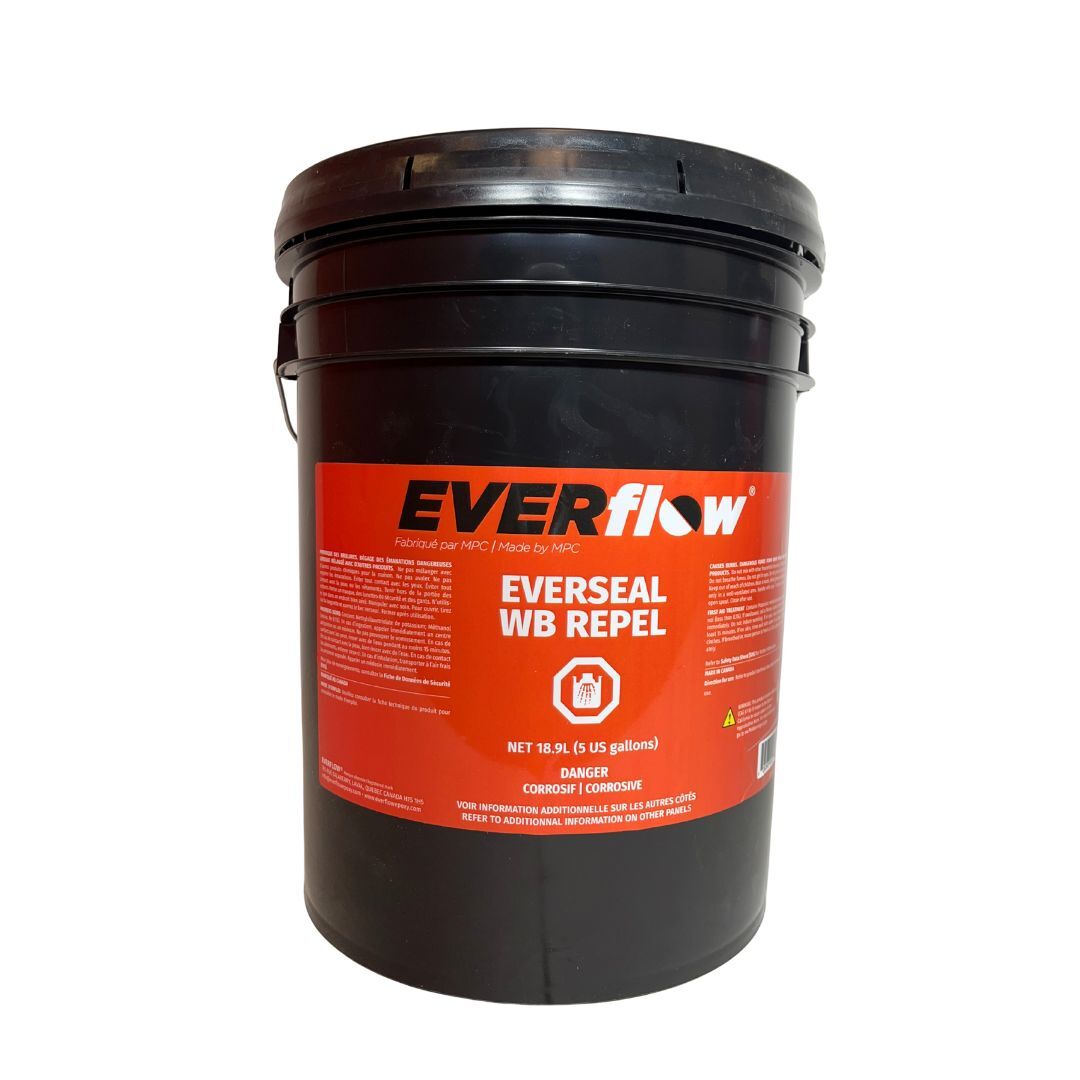
EVERSEAL WB REPEL is a 100% reactive, waterborne siliconate-based penetrating sealer engineered for use on above-grade concrete and masonry substrates in both interior and exterior environments. This clear, breathable treatment penetrates deep into porous surfaces, forming a covalent bond with the silica in the substrate to create a hydrophobic barrier.
EVERSEAL Siloxal-Na is a high-performance, nano-sodium-based hardener, densifier, and sealer designed to protect and extend the service life of concrete surfaces. It provides effective resistance against salt damage, freeze-thaw cycles, moisture penetration, and steel corrosion. Formulated to chemically react with calcium hydroxide in the concrete, it helps reduce efflorescence while enhancing surface strength, improving durability, and delivering long-lasting dustproofing performance.
GET IN TOUCH WITH US
Contact Our Specialists For Assistance With All Your Projects
‣Fibrillated polyethylene pulp ‣Enhances dimensional stability ‣Improves water, sag, and slump resistance ‣Increases film strength ‣Non-hazardous and zero VOC
BENEFITS
‣Reduces cracking and shrinkage in coatings ‣Easy to incorporate for multiple textures (e.g., cove, orange peel, crack filler) ‣Improves long-term durability and performance ‣Safe to handle with no harmful emissions ‣Compatible across residential, commercial, and industrial settings
Features & Benefits
FEATURES
‣High Clarity & Gloss – 92.8 GU @ 60° for a premium glass-like appearance ‣Excellent Flow and Bubble Release – Low viscosity formula reduces air entrapment ‣Food Contact Approved (CFIA & USDA) – Safe when properly mixed and cured ‣Abrasion Resistance – 0.1g loss @ 1000 cycles ‣High Mechanical Strength – Tensile: 8,500 psi; Compressive: 6,200 psi ‣VOC <50 g/L – LEED compliant and safe for indoor use
BENEFITS
‣Excellent Durability – Resists wear, scratches, and chemical exposure in high- traffic zones ‣Food-Safe Finish – Ideal for residential kitchens, butcher blocks, or commercial surfaces ‣Customizable – Compatible with Everflow pigment packs to create unique designs and finishes ‣Quick Turnaround – Return to service in as little as 1 day for light us
Surface preparation and mixing instruction
SURFACE PREPARATION
Remove dust, dirt, grease, oil, and all other contaminants with proper cleaner/degreaser. Be careful with condensation (at least 3 degrees of the dew point). All cracks, holes and irregularities must be repaired with a crack filler prior to applying the coating. A seal coat is recommended on very porous material to help prevent air bubble release during the curing process.
MIXING INSTRUCTION
Empty container B (hardener) and container A (resin) into a large mixing pail. Mechanically mix the combined product for a maximum of 1 minute using a low-speed drill (300-450rpm) to reduce air entrapment and to obtain a homogeneous mixture. Once the product is mixed proceed to application instructions. Do not let the product sit in the container as it will rapidly start to react and cure.
Features & Benefits
FEATURES
‣100% solids, ultra-clear epoxy ‣Up to 2.5″ pour depth ‣Low viscosity for bubble-free casting ‣High UV resistance ‣VOC-free and food contact compliant (CFIA)
BENEFITS
‣Ideal for river tables, jewelry, and embedments ‣Long working time allows for detailed, complex shapes ‣Excellent clarity and gloss retention ‣Safe for residential and commercial applications ‣Conforms to LEEDv4 and USDA standards
Surface preparation and mixing instruction
SURFACE PREPARATION
Remove dust, dirt, grease, oil, and all other contaminants with proper cleaner/degreaser. All cracks, holes and irregularities must be repaired with a crack filler prior to applying the coating. A seal coat is recommended on very porous material to help prevent air bubble release during the curing process.
MIXING INSTRUCTION
Empty container B (hardener) and container A (resin) into a large mixing pail. Mechanically mix the combined product for a maximum of 1 minute using a low-speed drill (300-450rpm) to reduce air entrapment and to obtain a homogeneous mixture. Once the product is mixed proceed to application instructions. Do not let the product sit in container as it will rapidly start to react and cure.
Features & Benefits
FEATURES
‣3-component, 100% solids mortar system ‣Designed for vertical or radius coves ‣Excellent mechanical properties ‣CFIA & USDA compliant ‣High abrasion and chemical resistance
BENEFITS
‣Ideal for creating sanitary coves and transitions ‣Prevents water and bacteria infiltration in critical areas ‣Suitable for aggressive industrial environments ‣High adhesion even on vertical surfaces ‣Durable, long-lasting performance in harsh settings
Surface preparation and mixing instruction
SURFACE PREPARATION
Remove dust, dirt, grease, oil, and all other contaminants with proper cleaner/degreaser. Prepare the surface mechanically as per ICRI-CSP2 profile by diamond grinding to ensure removal of laitance, curing agents and sealers. The compressive strength of a newly poured concrete substrate must be at least 25 MPA (3635 psi) after 28 days of cure and at least 1.5 MPA (218 psi) tensile strength. Be careful with condensation (at least 3 degrees of the dew point).
MIXING INSTRUCTION
Empty container B (hardener) into container A (resin). Mechanically mix the combined product for a maximum of 1 minute using a low-speed drill (300- 450rpm) to reduce air entrapment and to obtain a homogeneous mixture. Once primed add the sand to the mixture and mechanically mix the combined product for an additional minute. Once the product is mixed proceed to application instructions. Do not let the product sit in the container as it will rapidly start to react and cure.
Features & Benefits
FEATURES
‣Flexible, self-leveling membrane ‣100% solids, high elongation (125%) ‣Excellent chemical, abrasion, and impact resistance ‣Used in waterproofing parking decks and balconies ‣VOC-compliant and CFIA certified
BENEFITS
‣Protects against cracking due to substrate movement ‣Ensures seamless waterproofing of critical surfaces ‣Long-lasting surface protection under high traffic ‣Can be sand broadcasted for slip-resistance ‣Easy to apply and maintains durability across seasons
Surface preparation and mixing instruction
SURFACE PREPARATION
Remove dust, dirt, grease, oil, and all other contaminants with proper cleaner/degreaser. Prepare the surface mechanically as per ICRI-CSP2 profile by diamond grinding to ensure removal of laitance, curing agents and sealers. The compressive strength of a newly poured concrete substrate must be at least 25 MPA (3635 psi) after 28 days of cure and at least 1.5 MPA (218 psi) tensile strength. Be careful with condensation (at least 3 degrees of the dew point). All cracks, holes and irregularities must be repaired with a crack filler prior to applying the coating. Not recommended for use directly on concrete.
MIXING INSTRUCTION
Empty container B (hardener) into container A (resin). Mechanically mix the combined product for a maximum of 1 minute using a low-speed drill (300- 450rpm) to reduce air entrapment and to obtain a homogeneous mixture. Once the product is mixed proceed to application instructions. Do not let the product sit in the container as it will rapidly start to react and cure.
Features & Benefits
FEATURES
‣Flexible high-build epoxy urethane membrane ‣300% elongation at break ‣Waterproof and impact-resistant ‣100% solids, self-leveling ‣VOC content <50 g/L
BENEFITS
‣Ideal for balconies, parking decks, pool surrounds, and industrial floors ‣Forms a seamless membrane that prevents water infiltration ‣High flexibility makes it perfect for areas subject to movement or vibration ‣Excellent abrasion, chemical, and impact resistance ‣Contributes to LEED credits; safe for use in CFIA/USDA-approved facilities
Surface preparation and mixing instruction
SURFACE PREPARATION
Remove dust, dirt, grease, oil, and all other contaminants with proper cleaner/degreaser. Prepare the surface mechanically as per ICRI-CSP2 profile by diamond grinding to ensure removal of laitance, curing agents and sealers. The compressive strength of a newly poured concrete substrate must be at least 25 MPA (3635 psi) after 28 days of cure and at least 1.5 MPA (218 psi) tensile strength. Be careful with condensation (at least 3 degrees of the dew point). All cracks, holes and irregularities must be repaired with a crack filler prior to applying the coating. Not recommended for use directly on concrete.
MIXING INSTRUCTION
Empty container B (hardener) into container A (resin). Mechanically mix the combined product for a maximum of 1 minute using a low-speed drill (300- 450rpm) to reduce air entrapment and to obtain a homogeneous mixture. Once the product is mixed proceed to application instructions. Do not let the product sit in the container as it will rapidly start to react and cure.
Features & Benefits
FEATURES
‣Microbial formula with active enzymes ‣VOC-exempt and EPA Safer Choice-compliant ‣Non-caustic, non-acidic ‣Ready-to-use (no dilution) ‣Certified for food contact areas
BENEFITS
‣Safely breaks down grease, proteins, and organic waste ‣Ideal for restaurant floors, kitchens, and prep zones ‣Eliminates odors by attacking organic residues ‣No rinsing or neutralization needed after use ‣Eco-friendly, safe for users and environment
Features & Benefits
FEATURES
High Compressive Strength: Engineered for heavy-duty environments, offering superior durability and load resistance.
Rapid Cure Time: Allows for faster turnaround on installations and minimizes downtime.
Excellent Adhesion to Concrete Substrates: Bonds strongly to prepared surfaces, reducing risk of delamination.
Self-Leveling Capability: Ensures smooth, even application for flat and consistent finishes.
Moisture-Tolerant Formula: Suitable for use in damp environments or on green concrete.
BENEFITS
Minimizes Downtime: Rapid return-to-service means less disruption to business or operations.
Long-Term Performance: Reduces maintenance costs due to its resistance to cracking and wear.
Versatile Application: Ideal for resurfacing, patching, or leveling concrete in commercial, industrial, and institutional settings.
Professional-Grade Results: Leaves a dense, smooth surface ready for topcoat or decorative finishes.
Reliable in Challenging Conditions: Performs well even in moisture-prone areas like basements, warehouses, or food facilities.
Surface preparation and mixing instruction
SURFACE PREPARATION
Remove dust, dirt, grease, oil, and all other contaminants with proper cleaner/degreaser. Prepare the surface mechanically as per ICRI-CSP2 profile by diamond grinding to ensure removal of laitance, curing agents and sealers. The compressive strength of a newly poured concrete substrate must be at least 25 MPA (3635 psi) after 28 days of cure and at least 1.5 MPA (218 psi) tensile strength. Can be applied on 7–10-day old concrete if substrate has a tensile bond strength in excess of 1.5 MPA (218 psi). Be careful with condensation (at least 3 degrees of the dew point).
MIXING INSTRUCTION
Empty container B (hardener) and container A (resin) into a large mixing pail provided. Mechanically mix the combined product for a maximum of 1 minute using a low-speed drill (300-450rpm) to reduce air entrapment. Add gradually the cement/aggregate into the mixture and mix until homogeneous. Once the product is mixed proceed to application instructions. Do not let the product sit in container as it will rapidly start to react and cure.
Features & Benefits
FEATURES
100% Solids, Odorless, Solvent-Free High-Performance Polyurethane Chemistry Tensile strength: 7–8 MPa, Elongation: 50–70%, Shore D Hardness >40. Excellent UV Resistance Aliphatic formulation prevents yellowing and maintains clarity over time. Flexible Binder-to-Aggregate Mixing Ratio (1:14) Optimized for aggregates ≥7 mm; customizable for finer blends. Efficient Pot Life and Cure Time Pot life: 30 minutes Ready for foot traffic: 8–10 hours Car traffic: ~24 hours Easy Application with Notched Trowel Spread and finish with minimal tools required. Wide Temperature Range Application: 5–25°C Ambient: 3–30°C
BENEFITS
Perfect for Stone Encapsulation Ideal for decorative systems on patios, pool surrounds, walkways, and garages. Traffic-Ready Surface Supports both foot and vehicular traffic with excellent durability. Crystal-Clear Finish Enhances the natural look of stone or aggregate without yellowing. Contractor Friendly Simple mixing and trowel application make it easy to install even on-site. Long-Lasting and Weatherproof Withstands wear, UV exposure, and freeze-thaw cycles—great for Canadian climates.
Surface preparation and mixing instruction
SURFACE PREPARATION
Remove dust, dirt, grease, oil, and all other contaminants with proper cleaner/degreaser. Prepare the surface mechanically as per ICRI-CSP2 profile by diamond grinding to ensure removal of laitance, curing agents and sealers. The compressive strength of a newly poured concrete substrate must be at least 25 MPA (3635 psi) after 28 days of cure and at least 1.5 MPA (218 psi) tensile strength. Be careful with condensation (at least 3 degrees of the dew point). All cracks, holes and irregularities must be repaired with a crack filler and concrete surface must be primed prior to applying the coating.
Features & Benefits
FEATURES
‣Water-based self-crosslinking acrylic sealer ‣Single-component (no mixing required) ‣High-gloss “wet-look” finish ‣Excellent water and blush resistance ‣Abrasion resistant ‣Hot tire pickup resistant ‣Interior and exterior compatible ‣VOC compliant
BENEFITS
‣Simplifies application and reduces labor error ‣Speeds up installation time ‣Enhances decorative concrete appearance ‣Reduces whitening and surface defects ‣Performs well in garages and light industrial floors ‣Maintains cleaner surfaces with less staining ‣One product for multiple project types ‣Supports environmentally regulated projects
Surface preparation and mixing instruction
SURFACE PREPARATION
Remove dust, dirt, grease, oil, and all other contaminants with proper cleaner/degreaser. Ensure the removal of any laitance, curing agents and sealers. Allow newly poured concrete to cure for a minimum of 14 days before application. Avoid using any citrus or acidic cleaners. All cracks, holes and irregularities must be repaired with a crack filler prior to applying the coating. Protect adjacent surfaces including grass, plants, shrubs, asphalt, glass, and painted surfaces from drips or over-sprays. Apply evenly on the surface using a low pressure, non-atomizing, airless sprayer or urethane grade roller. Maintain uniformity of coverage and avoid product puddling.
Features & Benefits
FEATURES
‣Nano-lithium concrete hardener, densifier, and sealer ‣3-in-1 penetrating treatment ‣Chemically reacts with calcium hydroxide ‣Non-film forming and breathable ‣Reduces chloride and water absorption ‣Meets NCHRP 244 and SSW ‣110C standards ‣VOC compliant
BENEFITS
‣Strengthens and densifies concrete in one application ‣Reduces efflorescence and surface dusting ‣Preserves natural concrete appearance ‣Improves durability in freeze-thaw climates ‣Extends slab service life in parking structures ‣Reduces long-term maintenance costs ‣Suitable for polished concrete systems
Surface preparation and mixing instruction
SURFACE PREPARATION
Remove dust, dirt, grease, oil, and all other contaminants with proper cleaner/degreaser. Ensure the removal of any laitance, curing agents and sealers. Avoid using any citrus or acidic cleaners. All cracks, holes and irregularities must be repaired with a crack filler prior to applying the coating. Protect adjacent surfaces including grass, plants, shrubs, asphalt, glass, and painted surfaces from drips or over-sprays.
Features & Benefits
FEATURES
‣100% reactive siliconate penetrating sealer ‣Deep hydrophobic barrier formation ‣Non-film forming and breathable ‣High chloride ion resistance ‣Freeze-thaw resistant (ASTM C672 – no scaling) ‣Above-grade concrete protection ‣VOC compliant
BENEFITS
‣Prevents moisture intrusion without altering appearance ‣Protects parking decks, ramps, and marine concrete ‣Reduces salt and de-icing damage ‣Extends durability in harsh climates ‣Maintains natural substrate texture ‣Ideal for exposed structural concrete ‣Minimizes long-term structural deterioration
Surface preparation and mixing instruction
SURFACE PREPARATION
Remove dust, dirt, grease, oil, and all other contaminants with proper cleaner/degreaser. Ensure the removal of any laitance, curing agents and sealers. Allow newly poured concrete to cure for a minimum of 14 days before application. Avoid using any citrus or acidic cleaners. All cracks, holes and irregularities must be repaired with a crack filler prior to applying the coating. Protect adjacent surfaces including grass, plants, shrubs, asphalt, glass, and painted surfaces from drips or over-sprays. Apply evenly on the surface using a low pressure, non-atomizing, airless sprayer. Broom or squeegee out any excess material and puddles.
Features & Benefits
FEATURES
‣Nano-sodium concrete hardener, densifier, and sealer ‣3-in-1 penetrating treatment ‣Chemically reacts with calcium hydroxide in concrete ‣Non-film forming and breathable ‣Reduces water and chloride absorption ‣Improves resistance to salt damage and freeze-thaw cycles ‣Enhances surface strength and durability ‣Long-lasting dustproofing performance ‣Develops a light glossy sheen with traffic and burnishing ‣VOC compliant across North America ‣CFIA & USDA compliant for indirect food contact ‣LEED v4 compliant (low emitting materials) ‣Surface permeability improvement (RILEM 11.4: 5 mL untreated → 1 mL treated)
BENEFITS
‣Strengthens and protects concrete in a single application ‣Extends service life of slabs in harsh environments ‣Reduces efflorescence and surface degradation ‣Maintains natural concrete appearance without creating a surface film ‣Protects parking decks, warehouses, and industrial floors from salt intrusion ‣Improves long-term structural integrity of reinforced concrete ‣Reduces dusting and maintenance requirements ‣Allows polished concrete systems to develop natural sheen over time ‣Suitable for food plants and regulated environments ‣Supports sustainable and environmentally regulated projects ‣Significantly reduces water absorption, improving durability
Surface preparation and mixing instruction
SURFACE PREPARATION
Remove dust, dirt, grease, oil, and all other contaminants with proper cleaner/degreaser. Ensure the removal of any laitance, curing agents and sealers. Avoid using any citrus or acidic cleaners. All cracks, holes and irregularities must be repaired with a crack filler prior to applying the coating. Protect adjacent surfaces including grass, plants, shrubs, asphalt, glass, and painted surfaces from drips or over-sprays.