EVERSHIELD-301 is a three component, high solids, aliphatic polyurethane coating. It is designed as a UV-stable, chemical-resistant topcoat making it perfect for areas of high industrial traffic. This product will leave a satin finish and can be applied over an epoxy primer or used to coat an existing epoxy or urethane coating.
EVERSHIELD-303 is a two component, 100% solids, odorless, aliphatic polyurethane coating. This product exhibits fast dry time with adequate working time to be applied by brush and roller. It is recommended for areas where a high build coat is desired over colored coatings, vinyl flakes, or quartz broadcast systems.
A two-component, low-viscosity, 100% solid polyurethane resin, specifically designed as a primer to enhance bonding and improve surface leveling before applying liquid waterproofing membranes.
This two-component, transparent, aliphatic solvent-based polyurethane coating provides a glossy finish and is designed for the protection of our waterproofing, roofing and traffic liquid systems.
This two-component, colored, aliphatic solvent-based polyurethane coating provides a glossy finish and is designed for the protection of our waterproofing, roofing and traffic liquid systems.
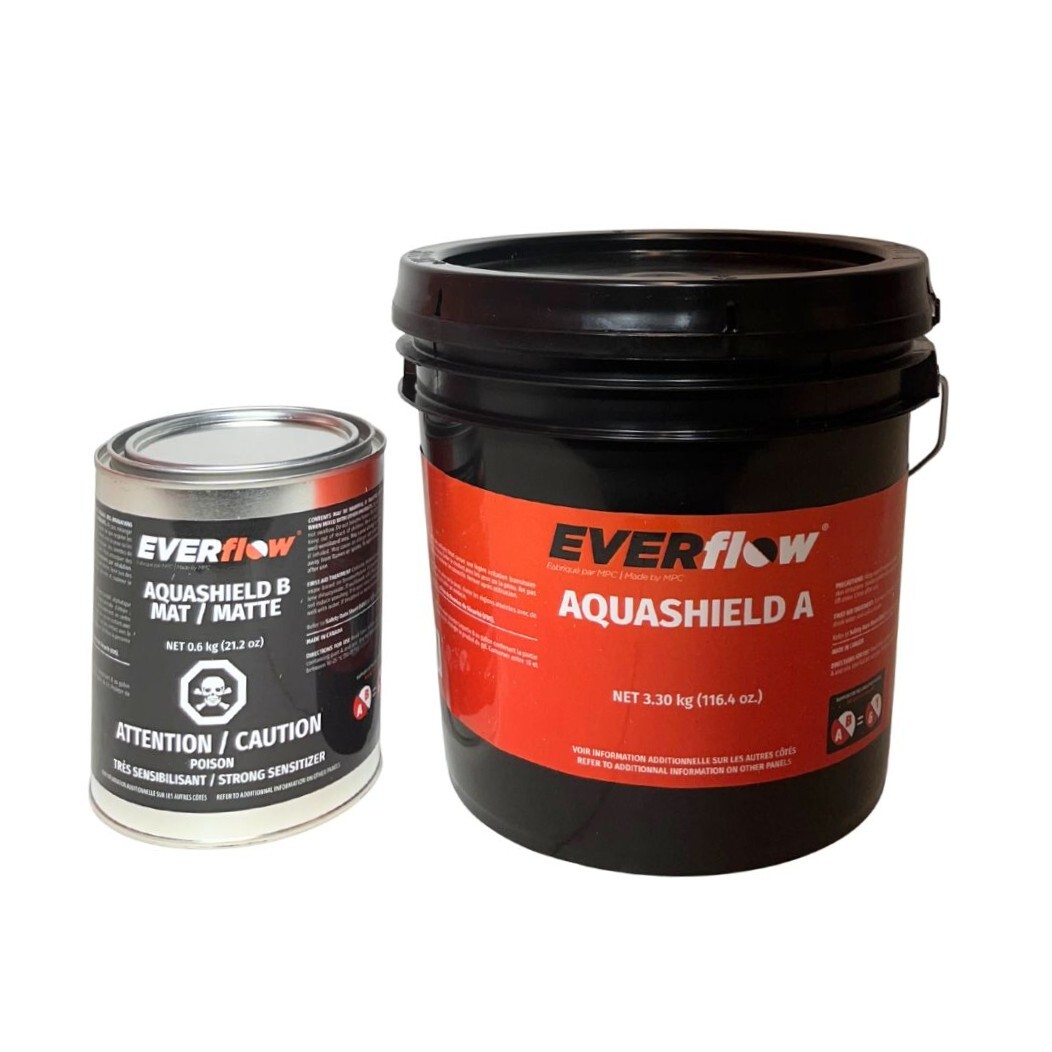
AQUASHIELD is a two-component, water-based aliphatic polyurethane clear floor coating with low VOC content and minimal odor. Designed as a UV, chemical, and solvent-resistant topcoat, it is available in both gloss and matte finishes. Aquashield offers excellent abrasion resistance and UV color stability, making it suitable for direct application on concrete or as a durable, decorative layer over existing epoxy coatings.
Why choose a polyure-thane coating?
Polyurethane is a type of material often used to make a variety of products, including foam insulation, adhesives, and coatings. Polyurethane coatings are a protective layer that can be applied to surfaces such as wood, metal or concrete to improve their appearance and durability. They are known for their resistance to scratches, moisture and chemicals, and are often used in the construction, automotive and furniture industries.
GET IN TOUCH WITH US
Contact Our Specialists For Assistance With All Your Projects
‣3-component, high-solids (85%) aliphatic moisture-cure polyurethane ‣Satin finish with exceptional abrasion and chemical resistance ‣UV stable for outdoor and indoor use ‣Low VOC (<10 g/L), LEED compliant ‣Coefficient of friction ~0.80 wet (with aluminum oxide)
BENEFITS
‣Excellent Topcoat for Epoxy Systems – Protects and enhances decorative floors with a satin look ‣Long-Term Durability – Withstands chemicals, traffic, and UV exposure ‣Moisture-Cure System – Reliable curing even in humid environments ‣Safe for Food Facilities – Meets CFIA and USDA standards ‣Reduced Slipping Risk – Ideal for areas requiring traction with aluminum oxide additive
Surface preparation and mixing instruction
SURFACE PREPARATION
Remove dust, dirt, grease, oil, and all other contaminants with proper cleaner/degreaser. Prepare the surface mechanically as per ICRI-CSP2 profile by diamond grinding to ensure removal of laitance, curing agents and sealers. The compressive strength of a newly poured concrete substrate must be at least 25 MPA (3635 psi) after 28 days of cure and at least 1.5 MPA (218 psi) tensile strength. Be careful with condensation (at least 3 degrees of the dew point). All cracks, holes and irregularities must be repaired with a crack filler prior to applying the coating. Not recommended for use directly on concrete.
MIXING INSTRUCTION
Empty container B (resin) into container A (hardener). Mix and add component C. Mechanically mix the combined product for a maximum of 1 minute using a low-speed drill (300-450rpm) to reduce air entrapment and to obtain a homogeneous mixture. Once the product is mixed proceed to application instructions. Do not let the product sit in the container as it will rapidly start to react and cure.
Features & Benefits
FEATURES
‣100% solids, odorless, aliphatic polyurethane ‣Fast drying with a work time of 25–30 minutes ‣UV stable, non-yellowing, and gloss-retaining ‣VOC <5 g/L, ultra-low emissions ‣High slip resistance: DCOF 0.99 dry / 0.42 wet
BENEFITS
‣Ideal for Decorative Broadcast Systems – Delivers a high-gloss finish over flake, quartz, or epoxy ‣Installer-Friendly – Odorless with manageable working time ‣Maximizes Light Reflectivity – Enhances visibility and space aesthetics ‣Extremely Durable – Excellent abrasion and chemical resistance for high-traffic zones ‣Safe for Indoors – Low odor and VOCs allow application in occupied buildings
Surface preparation and mixing instruction
SURFACE PREPARATION
Remove dust, dirt, grease, oil, and all other contaminants with proper cleaner/degreaser. Prepare the surface mechanically as per ICRI-CSP2 profile by diamond grinding to ensure removal of laitance, curing agents and sealers. The compressive strength of a newly poured concrete substrate must be at least 25 MPA (3635 psi) after 28 days of cure and at least 1.5 MPA (218 psi) tensile strength. Be careful with condensation (at least 3 degrees of the dew point). All cracks, holes and irregularities must be repaired with a crack filler prior to applying the coating.
MIXING INSTRUCTION
Empty container A (resin) and container B (hardener) into a large mixing pail. Mechanically mix the combined product for a maximum of 1 minute using a low-speed drill (300-450rpm) to reduce air entrapment and to obtain a homogeneous mixture. Once the product is mixed proceed to application instructions. Do not let the product sit in the container as it will rapidly start to react and cure.
Features & Benefits
FEATURES
Two-Component, 100% Solids Formula: Solvent-free, low-viscosity polyurethane resin ensuring high performance and VOC compliance (0 g/L). Excellent Adhesion Promoter: Enhances bond strength on concrete, mortar, and overlapping aged membranes. High Coverage Rate: ~530 ft² per kit @ 7 mils thickness for efficient material usage. Fast Recoat Time: Ready for reapplication in as little as 3 hours, accelerating project timelines. Wide Application Window: Usable in temperatures from 5°C to 35°C (41°F to 95°F), adaptable to different climates. Low Permeability: Excellent resistance to water vapor and liquid water per UNE-EN standards. Fire Resistance Classification: Rated Efl according to EN-13501-1:2007 + A1:2010. No Dilution Required: Pre-calibrated 1:1 mix ratio for ease of use and optimal performance. Compatible with Fillers: Can be blended with mineral-based fillers for improved mechanical adhesion on irregular substrates.
BENEFITS
Superior Surface Preparation: Maximizes adhesion for subsequent waterproofing or topcoat systems, reducing failure risks. Increased Project Efficiency: Fast curing and simple mix-and-apply process reduce downtime and labor costs. Eco-Friendly & Odorless: 0 g/L VOC and solvent-free formula makes it ideal for occupied or enclosed environments. Reliable in Demanding Environments: Withstands a wide range of temperatures and humidity conditions. Enhanced Durability: Forms a seamless, continuous film that resists blistering, peeling, and delamination. Versatile Application: Ideal for waterproofing systems, roofing, and parking decks across residential, commercial, or industrial projects.
Surface preparation and mixing instruction
Surface preparation for cement/concrete substrates:
Remove dust, dirt, grease, oil, and all other contaminants with proper cleaner/degreaser. Prepare the surface mechanically as per ICRI-CSP3-5 profile by diamond grinding to ensure removal of laitance, curing agents and sealers. The compressive strength of a newly poured concrete substrate must be at least 25 MPA (3635 psi) after 28 days of cure and at least 1.5 MPA (218 psi) tensile strength. Be careful with condensation (at least 3 degrees of the dew point). All cracks, holes and irregularities must be repaired with a crack filler prior to applying the coating.
Application method (classic application)
Open each container and pour them into a large mixing pail. Mechanically mix the products using a low-speed drill (300-450 rpm) to reduce air entrapment and to obtain a homogeneous mixture. Apply the mixture in two or more thin, crossed coats until the desired surface level is achieved, ensuring to allow proper drying time before recoating. The consumption ranges from 150 to 250 g/sqm, depending on the substrate’s roughness. Apply as many coats as needed for the substrate. Always follow the recommended recoat time between layers or different materials. For repairs, overlaps, or joining bridges between already cured membranes, the consumption may be lower.
Features & Benefits
FEATURES
Crystal Clear Finish Ideal for decorative systems requiring gloss and transparency. UV-Resistant Aliphatic Composition Prevents yellowing, chalking, or fading over time. Durable and Flexible Maintains flexibility with excellent adhesion and mechanical performance. Application Flexibility Compatible with roller, brush, or airless spray equipment. Consistent Performance Across Temperatures Functional from -20°C to +80°C. Efficient Coverage Covers approx. 938 ft²/kit at 8 mils thickness. Fast Application Window Pot life: ~1 hour Dry to touch: ~2 hours Recoat: 2–24 hours Full cure: ~7 days
BENEFITS
Ideal for Decorative Flake or Quartz Broadcast Systems Adds a protective, high-gloss clear coat without altering base color. Long-Term UV Protection Maintains system performance and appearance over time. Versatile Protection Layer Use over epoxy, PU, or cementitious base coats for added resistance. Quick to Install Short recoat times and fast drying help keep projects moving. Enhanced Visibility Clear version is perfect for environments where wear layers should remain visible for inspection or design.
Surface preparation and mixing instruction
SURFACE PREPARATION
Remove dust, dirt, grease, oil, and all other contaminants with proper cleaner/degreaser. Prepare the surface mechanically as per ICRI-CSP2 profile by diamond grinding to ensure removal of laitance, curing agents and sealers. The compressive strength of a newly poured concrete substrate must be at least 25 MPA (3635 psi) after 28 days of cure and at least 1.5 MPA (218 psi) tensile strength. Be careful with condensation (at least 3 degrees of the dew point). All cracks, holes and irregularities must be repaired with a crack filler prior to applying the coating.
Features & Benefits
FEATURES
Glossy Finish Enhances aesthetic appeal while protecting floor systems. UV-Stable Aliphatic Formula Maintains color and gloss under direct sunlight. Excellent Mechanical Resistance Abrasion: 30 µm wear Impact: >14.7 Nm Adhesion: 3.5 MPa Elongation at break: ±95% Slip Resistant Rd = 53, Class 3 (wet areas and pools) R12 (ramp test, DIN 51130) Flexible Application Can be applied by roller, brush, or airless sprayer. Fast Return to Service Pedestrian traffic: ±12 hrs Vehicular traffic: ±24 hrs Weather and UV Resistant Suitable for indoor and outdoor use. Wide Substrate Compatibility Concrete, mortar, steel, plywood, tile, and more.
BENEFITS
Durability Meets Design Provides long-lasting protection and professional appearance on commercial or traffic-exposed surfaces. Safe and Reliable High slip resistance for safety in wet or outdoor environments. Ideal for Harsh Environments Resists temperature extremes from -20°C to +80°C. Perfect for Topcoat Applications Designed to protect Everflow waterproofing membranes or any traffic coating needing UV resistance. Excellent Coverage Between 700-1420 sq. ft / kit (5-10 mils).
Surface preparation and mixing instruction
SURFACE PREPARATION
Remove dust, dirt, grease, oil, and all other contaminants with proper cleaner/degreaser. Prepare the surface mechanically as per ICRI-CSP2 profile by diamond grinding to ensure removal of laitance, curing agents and sealers. The compressive strength of a newly poured concrete substrate must be at least 25 MPA (3635 psi) after 28 days of cure and at least 1.5 MPA (218 psi) tensile strength. Be careful with condensation (at least 3 degrees of the dew point). All cracks, holes and irregularities must be repaired with a crack filler prior to applying the coating.
APPLICATION METHOD
Open the containers, pour component B into the container of component A and mechanically mix the product using a low-speed drill (300-450 rpm) to reduce air entrapment and to obtain a homogeneous mixture. Apply the first layer with a short nap acrylic wool roller. The material should be applied undiluted. To acheive an anti-slip surface, broadcast the wet surface with silica sand at the consumption desired. Once dry, remove the nonadhering aggregate.Repeat this process as needed to reach the desired or recommended thickness.
‣Protects decorative epoxy systems from yellowing ‣Extends life of floor systems in high-traffic areas ‣Withstands cleaners and industrial exposure ‣Reduces maintenance frequency ‣Offers design flexibility for architects ‣Suitable for regulated food facilities ‣Provides durable, professional topcoat protection
Surface preparation and mixing instruction
SURFACE PREPARATION
Bare concrete: Remove dust, dirt, grease, oil, and all other contaminants with proper cleaner/degreaser. Prepare the surface mechanically as per ICRI-CSP2 profile by diamond grinding to ensure removal of laitance, curing agents and sealers. The compressive strength of a newly poured concrete substrate must be at least 25 MPA (3635 psi) after 28 days of cure and at least 1.5 MPA (218 psi) tensile strength. Be careful with condensation (at least 3 degrees of the dew point). All cracks, holes and irregularities must be repaired with a crack filler prior to applying the coating.
Previously coated surfaces: Make sure that any previously coated surface has been allowed to cure fully (according to their curing schedules). Ensure that the surface is dry and clean, free of any contaminants, grease, oil, paint, curing agents, dust, and laitance. Sand the existing coating using a 100-grit screed mesh, then thoroughly vacuum and clean surface prior to application of AQUASHIELD.
MIXING INSTRUCTION
Empty container B (hardener) into container A (resin). Mechanically mix the combined product for 1 minute using a low-speed drill (300-450 rpm) in a manner to reduce the incorporation of air and to obtain a homogeneous mixture. Once the product is mixed proceed to application instructions.